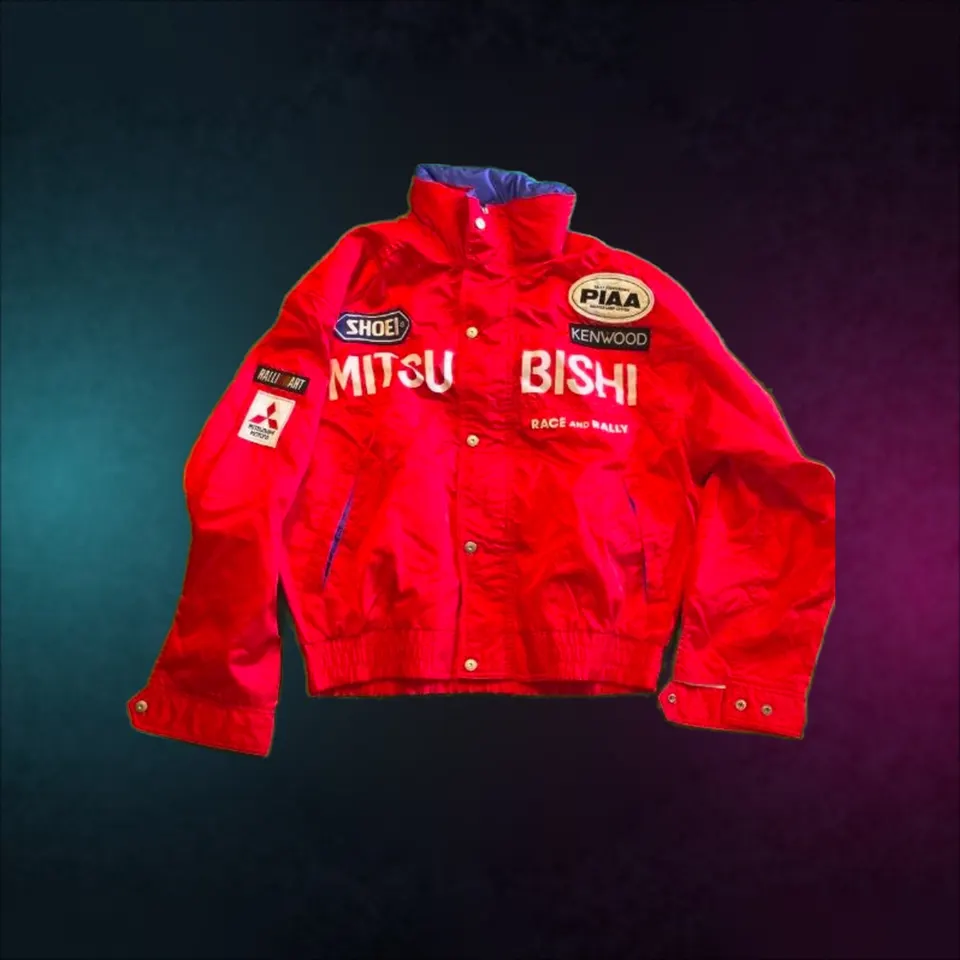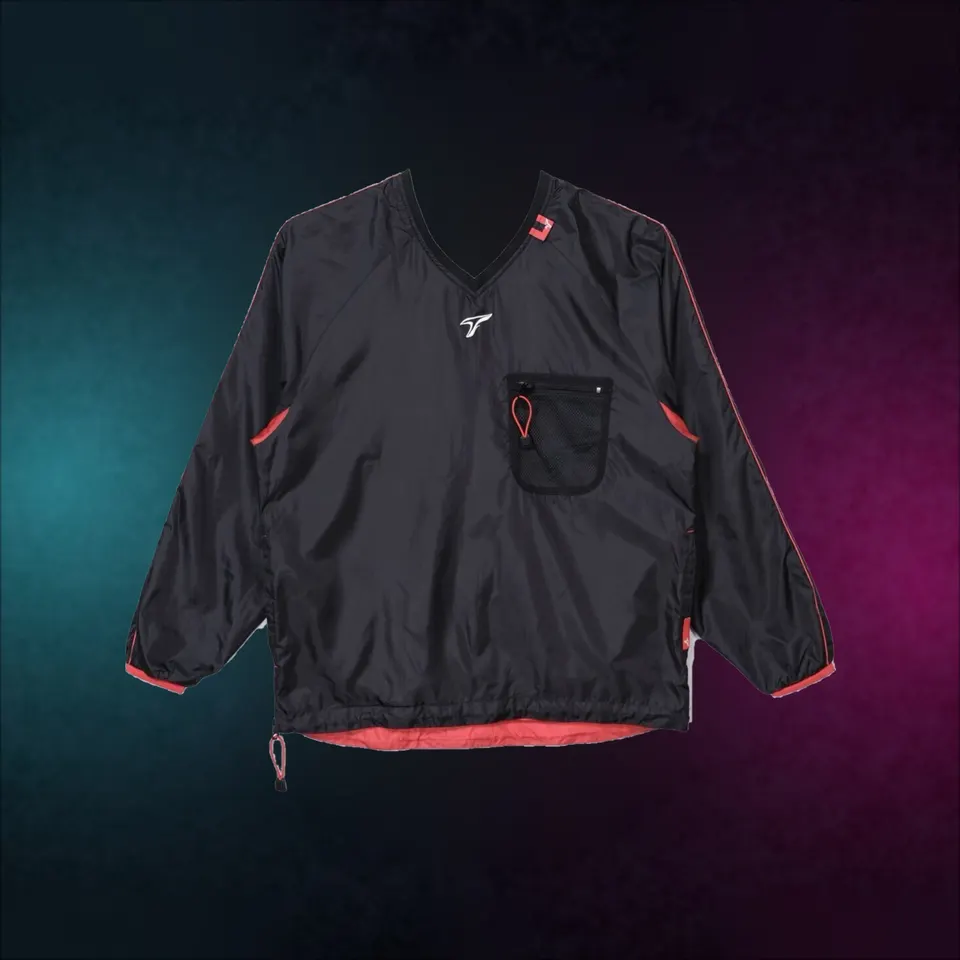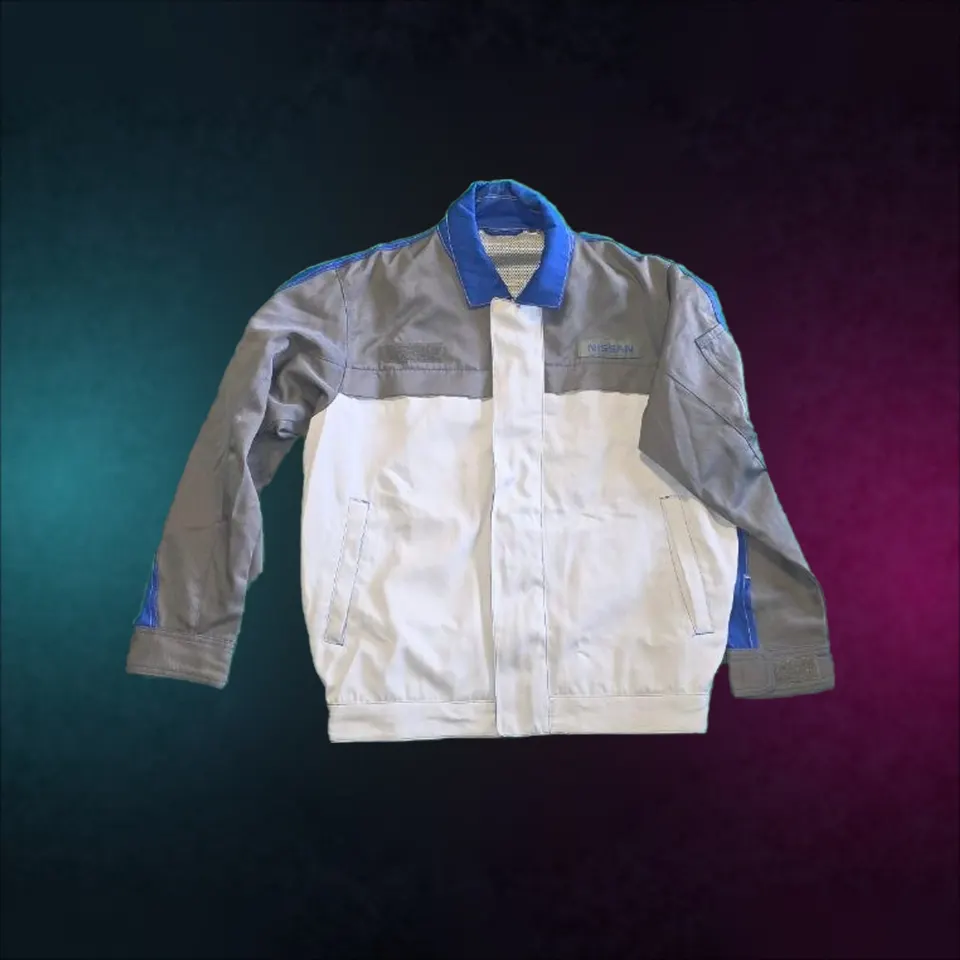
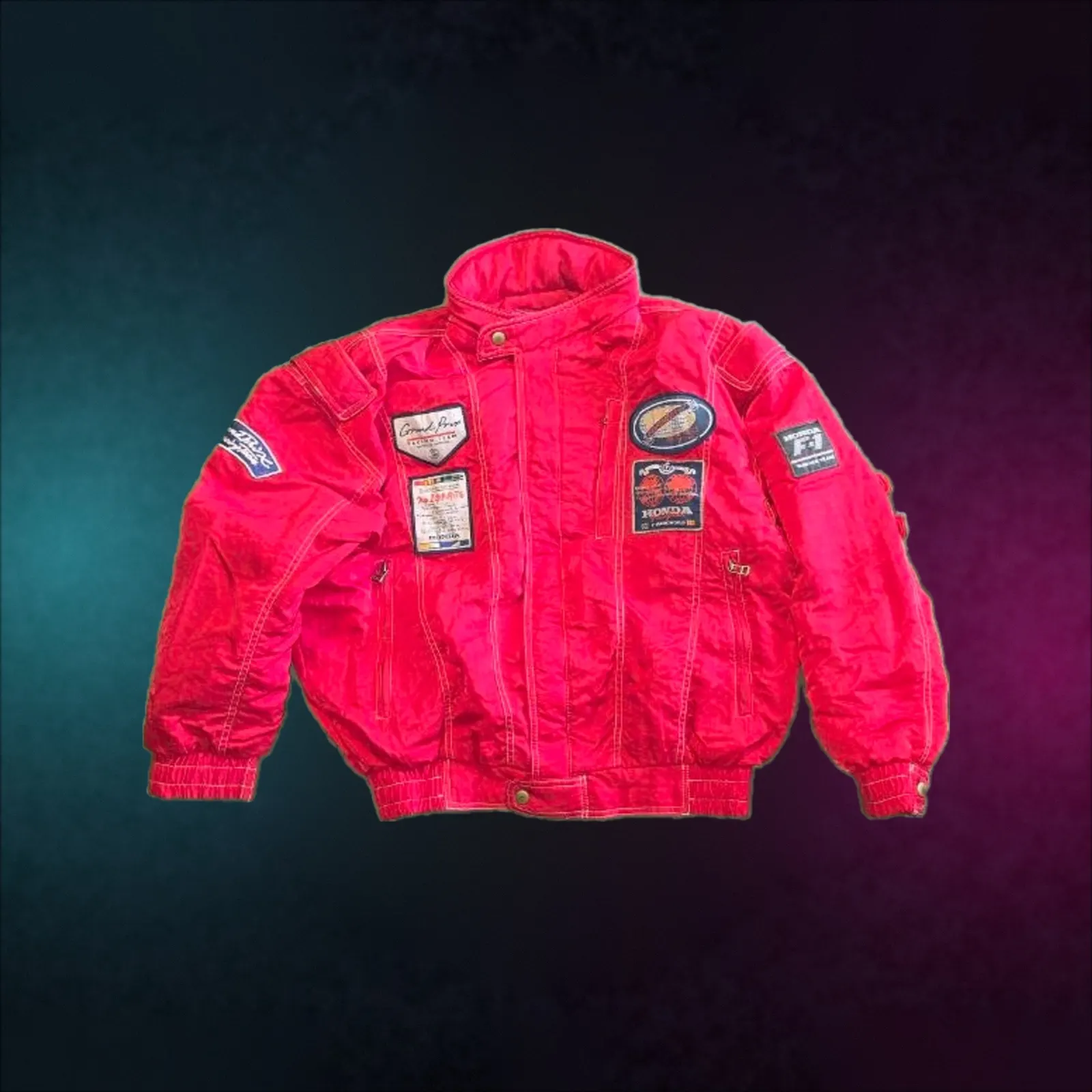
Honda F1 Collection Grand Prix Racing Team Padded Jacket — Red, Size M
Measurements
Not measured — ask us.
Ships free in Canada. Canadian orders over CA$300.00 ship free. Outside Canada CA$40.00.
All sales final. Arrived damaged, wrong or not as described? Tell us within 3 days of delivery. Returns policy.
One of one. When it sells, it moves to the Sold Archive. What the grades mean.
HONDA F1 COLLECTION GRAND PRIX RACING TEAM PADDED JACKET — RED, SIZE M
A red padded Honda F-1 Collection jacket covered in patches: Grand Prix Racing Team, No.1 SPIRITS, a Honda F-1 Racing World globe patch, a Formula 1 world patch and HONDA F-1 RACING TEAM sleeve badges. Tag: HONDA F1 COLLECTION, designed by Honda Direct Marketing Corp., size M.
CONDITION REPORT
- Complete; zips and snaps present.
- Patches show light wear and fading.
- Light creasing to the nylon.
DETAILS
Honda's McLaren-era engine dominance of 1988–1991 drove a wave of official Honda F1 Collection merchandise in Japan, sold through Honda's own marketing company.
The history
Honda declared its Formula 1 ambition in 1961, after dominating two classes of motorcycle Grand Prix racing. Its first car, the RA271, appeared at the German Grand Prix in August 1964 with a transverse 1.5-litre V12; Honda had planned to supply engines to Team Lotus, and when that deal fell through in February 1964 it built its own chassis and entered as a full constructor. Richie Ginther won the 1965 Mexican Grand Prix in the RA272, Honda's first victory in its 11th race, and John Surtees won at Monza in 1967. Honda withdrew after 1968 to concentrate on road cars.
Honda came back in 1983 as an engine supplier, and the second era is the one this jacket's patches point to. Honda-powered cars won six consecutive constructors' championships from 1986 to 1991, with Williams in 1986 and 1987 and McLaren from 1988 to 1991. Nelson Piquet took the 1987 drivers' title, Ayrton Senna won in 1988, 1990 and 1991, and Alain Prost in 1989, all with Honda engines.
The peak was 1988, the last season of the 1.5-litre turbo era. Boost was cut and fuel limited to 150 litres for turbo cars that year, and Honda chose to keep developing its restricted turbo rather than switch early to the coming 3.5-litre rules. The resulting RA168E V6 powered the McLaren MP4/4 to 15 wins from 16 races, a winning rate of 93.75 percent. Honda's second era ended with Gerhard Berger's win in Australia in 1992.
Official merchandise carried that success to people who would never stand in a pit lane. This jacket, labelled HONDA F1 COLLECTION and designed by Honda Direct Marketing Corp., is an example of how the company dressed its own fans in that racing identity. Its patches record the confidence of an engine maker that, for a few seasons, was the benchmark in Grand Prix racing.
Key dates
- 1964Honda's first Formula 1 car, the RA271, debuts at the German Grand Prix in August.
- 1965Richie Ginther wins the Mexican Grand Prix in the RA272, Honda's first F1 win.
- 1983Honda returns to Formula 1 as an engine supplier.
- 1986-1991Honda-powered teams win six consecutive constructors' titles: Williams 1986-1987, McLaren 1988-1991.
- 1988McLaren MP4/4 with Honda's RA168E turbo V6 wins 15 of 16 races in the final season of 1.5-litre turbos.
- 1992Gerhard Berger's Australian Grand Prix win closes Honda's second F1 era.
Reading this piece
- The HONDA F-1 RACING TEAM sleeve badges and Grand Prix Racing Team patch refer to Honda's Formula 1 program, which the listing places around 1990, within the years of six straight constructors' titles.
- The Honda F-1 Racing World globe patch and Formula 1 world patch speak to the world championship Honda engines were winning in those seasons.
- The HONDA F1 COLLECTION tag names Honda's own merchandise line, credited on the label to Honda Direct Marketing Corp.
Sources (5)
- Honda Racing F1 history (Honda UK)
- 1964 Honda RA271 (Honda Global)
- 1965 Honda RA272 (Honda Global)
- The Journey of Honda's F1 Dream (Honda Global)
- 1988 RA168E (Honda Global, Powered by Honda)
Researched by ZANJPN from the sources above. This history describes the team, brand or event behind the piece; it is not a claim about this particular item's past.